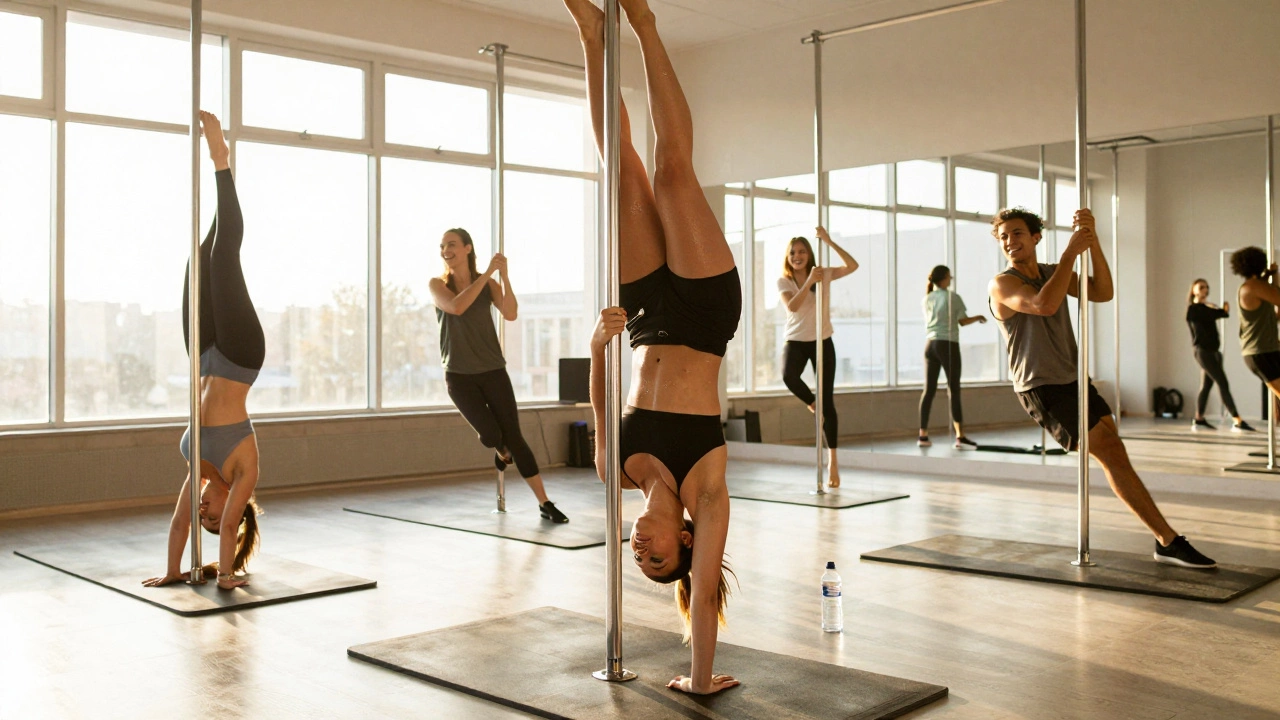
Stripping isn’t just about removing clothes-it’s about reclaiming movement, power, and expression. What began as underground performances in 19th-century saloons has grown into a global fitness phenomenon and a respected art form. Today, you’ll find pole studios in Melbourne, Tokyo, and Berlin, where people of all genders and ages train not for spectacle, but for strength, confidence, and community. The line between entertainment and athleticism has blurred, and the stigma that once clung to stripping is slowly lifting. For some, it started as a side gig to pay rent; for others, it became a lifelong passion. One woman in Sydney told me she took her first pole class after her divorce, not to impress anyone, but to feel her body work again. That’s the real story behind the shine and the spins.
It’s easy to confuse modern pole fitness with the adult entertainment industry, but they’re different worlds. While pole dancing in clubs often overlaps with exotic dance, the fitness version focuses on technique, endurance, and choreography. Still, the roots are shared. If you’re curious about how these worlds connect, you might stumble across escort occasionnelle paris-a term that reflects how performance, intimacy, and economics have long been tangled in urban nightlife. But that’s not what this is about. This is about sweat on the pole, calluses forming, and muscles you didn’t know you had.
The Birth of Stripping: From Vaudeville to Speakeasies
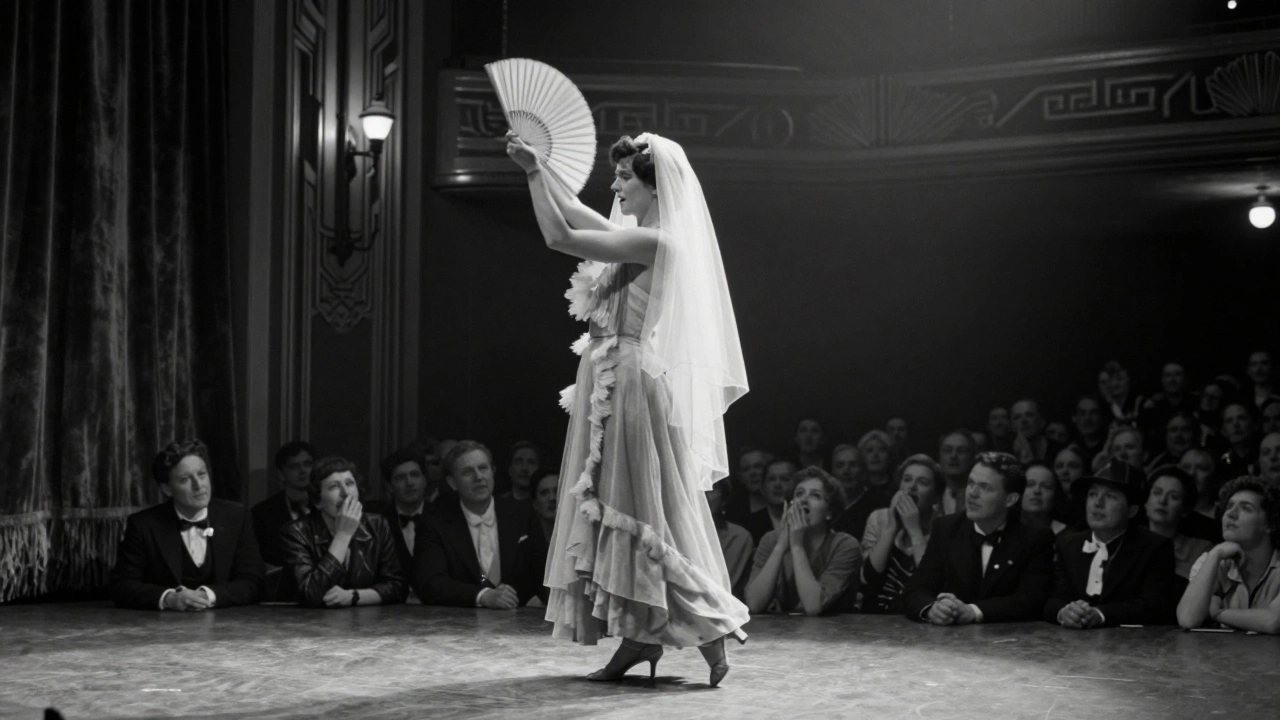
Stripping as performance began in the late 1800s, not in seedy backrooms, but on vaudeville stages. Dancers like Sally Rand and Gypsy Rose Lee turned undressing into art-slow, theatrical, and full of wit. They used fans, veils, and timing to tease, not shock. Audiences didn’t just watch-they laughed, gasped, and sometimes cried. These performers were savvy businesswomen, negotiating contracts and building brands long before social media existed. By the 1920s, as Prohibition pushed nightlife underground, stripping found a home in speakeasies. Dancers became part of the experience: part entertainer, part rebel, part survivor.
Mid-Century: The Rise of the Strip Club
After World War II, strip clubs exploded in cities like Chicago, New York, and later, Las Vegas. The focus shifted from storytelling to spectacle. The music got louder, the lighting got redder, and the dancers became more sexualized. This era cemented the public image of stripping as something shameful-something to hide. But even then, dancers were organizing. In the 1970s, performers in San Francisco formed unions, demanding better pay, safer working conditions, and respect. They weren’t asking to be seen as saints-they were asking to be seen as workers. That shift in language-‘dancer’ instead of ‘stripper’-wasn’t just semantics. It was survival.
The 2000s: Pole Fitness Goes Mainstream
The real turning point came in the early 2000s, when fitness instructors in the U.S. and Australia started teaching pole routines without the context of clubs. They borrowed moves from gymnastics, ballet, and dance, then built strength-based sequences around them. Women began showing up in leggings and sports bras, not sequins and stilettos. Studios opened in suburbs, not red-light districts. By 2010, pole fitness had its own competitions, certifications, and even Olympic-style judging criteria. The International Pole Sports Federation (IPSF) was founded in 2009, and by 2017, pole was recognized as a competitive sport by the Global Association of International Sports Federations.
What changed? It wasn’t just that people got stronger-it was that they stopped apologizing for it. A 62-year-old grandmother in Adelaide now competes in national pole championships. A non-binary teen in Brisbane uses pole to explore gender expression. A veteran in Perth says it helped her recover from PTSD. These aren’t outliers. They’re the new normal.
How Pole Fitness Works: Strength, Not Seduction
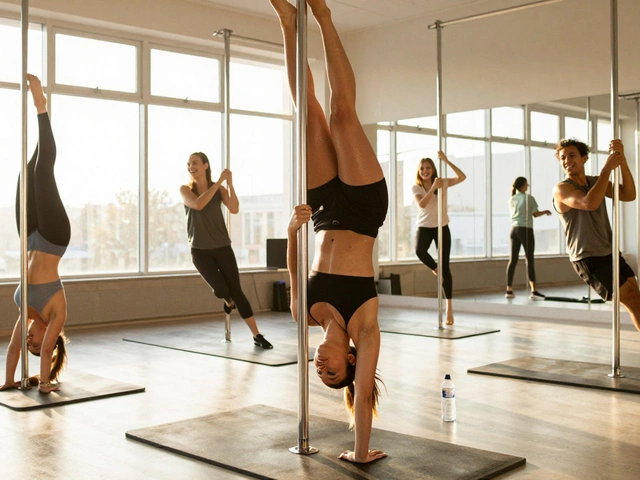
Pole fitness isn’t about flexibility or being thin. It’s about grip strength, core control, and mental focus. A basic climb requires you to lift your entire body weight using only your arms and thighs. A spin demands timing and momentum. An inversion-hanging upside down-tests your balance and fear. Most beginners think they’ll fail after a week. They usually quit after a month. The ones who stick with it? They’re the ones who realize it’s not about how you look. It’s about what you can do.
Training typically breaks down into three areas: spins, climbs, and poses. Each builds different muscles. Spins work the lats and shoulders. Climbs build biceps and grip. Static poses like the ‘scorpion’ or ‘dragon flag’ engage the entire core. Classes often end with a choreographed routine set to music-think Beyoncé meets circus act. No one is judged on their body type. You’re judged on your control, your expression, your effort.
Stripping Today: Art, Labor, Identity
Today, stripping exists in many forms. There are dancers in private homes, on livestreams, in theaters, and in gyms. Some earn six figures. Others work three jobs. Some perform to pay for medical bills. Others do it because they love the rush of a crowd’s applause. The rise of platforms like OnlyFans and Patreon has changed the game-now dancers can control their content, set their prices, and build direct relationships with clients. No middleman. No club owner taking half. Just the dancer and the audience.
And yet, legal and social barriers remain. In many places, stripping is still tied to sex work laws, making it harder to open studios, get insurance, or even rent space. Dancers still face discrimination in housing, banking, and childcare. But there’s progress. In 2023, a Melbourne-based pole studio became the first in Australia to receive government funding for community arts programming. That’s not just a win for them-it’s a win for everyone who’s ever been told their body isn’t worthy of respect.
The Connection Between Stripping and Pole Fitness
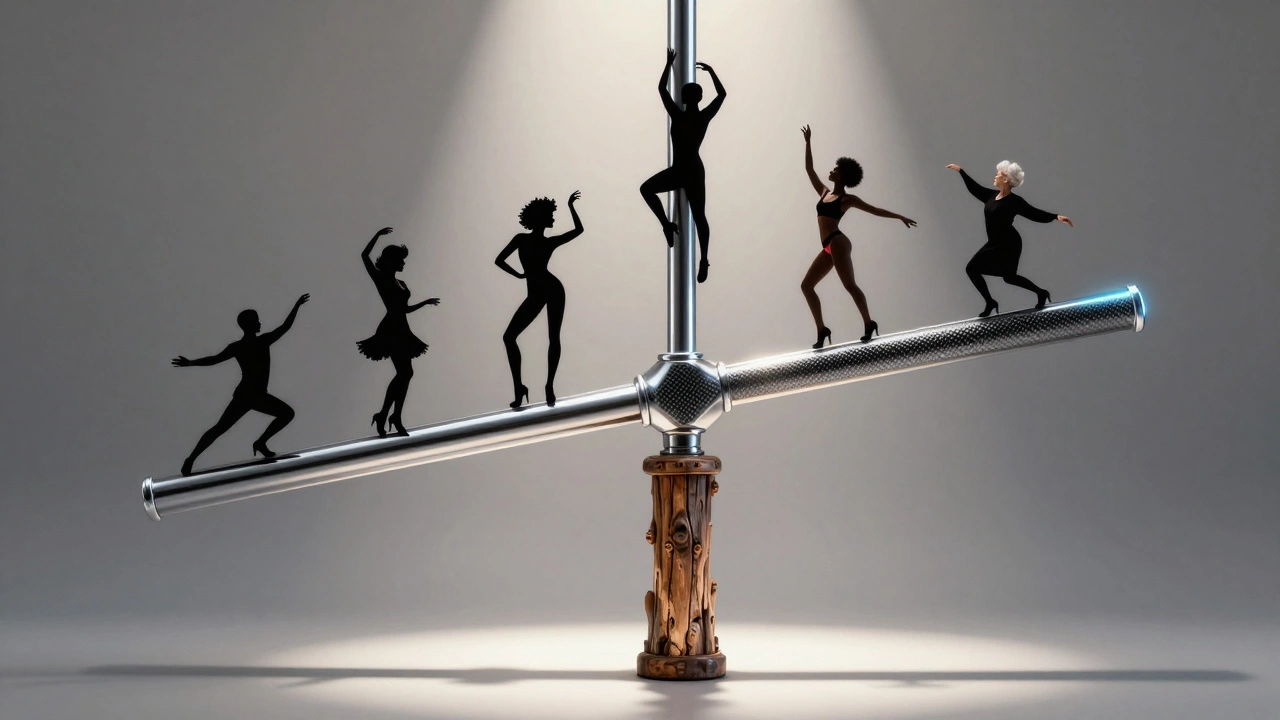
The two aren’t the same, but they’re not unrelated. Both require discipline. Both demand courage. Both challenge the idea that a woman’s body should be seen, not used. Pole fitness took the physicality of stripping and stripped away the stigma-literally and figuratively. It turned a performance into a practice. A job into a lifestyle. A taboo into a triumph.
When you see someone spinning upside down on a pole, don’t assume they’re doing it for someone else’s pleasure. They’re doing it because it makes them feel alive. Because they’ve learned how to hold their own weight. Because they’ve found a community that doesn’t care if they’re 18 or 80, straight or queer, thin or thick. They care that you showed up.
What’s Next for Stripping and Pole Fitness?
The future is decentralized. More dancers are becoming coaches, content creators, and entrepreneurs. Pole studios are partnering with physiotherapists and mental health professionals. Schools are starting to offer pole as part of physical education. And more men are joining-not just as students, but as performers and advocates. The next generation won’t see stripping as something to hide. They’ll see it as something to celebrate.
Meanwhile, pole fitness is inching toward global recognition. The IPSF is pushing for inclusion in the 2032 Olympics. If it happens, we’ll see athletes from Brazil, South Korea, and Canada competing on the world stage-not for money, not for attention, but for the sheer joy of movement.
And somewhere in a small studio in Footscray, a 12-year-old girl is learning her first spin. Her mom watches from the corner, smiling. She doesn’t know yet that this will change her life. But she will.
Is pole fitness only for women?
No. While early pole fitness classes were mostly attended by women, men and non-binary people have been part of the scene since the 2000s. Today, male pole athletes compete internationally, and studios actively welcome all genders. Strength, not gender, determines success.
Can you do pole fitness if you’re not flexible?
Absolutely. Flexibility comes with time. Most beginners start with basic climbs and spins that require zero flexibility. The focus is on building strength and control. Many people gain flexibility naturally through regular practice-no stretching routines required.
How long does it take to get good at pole fitness?
It varies. Most people see noticeable progress in 6-8 weeks with consistent classes (2-3 times a week). Mastering advanced moves like inversions or aerial transitions can take 6 months to 2 years. The key is consistency, not speed.
Is pole fitness safe for beginners?
Yes, when taught properly. Reputable studios use padded floors, spotter techniques, and progressive training. Beginners start on lower poles with safety mats. Injuries are rare-mostly minor bruises or skin burns from friction. Proper grip technique and rest days prevent most issues.
What’s the difference between pole dancing and pole fitness?
Pole dancing is often performed in adult entertainment settings and emphasizes sensuality, rhythm, and audience engagement. Pole fitness focuses on athletic skill, strength, and technique, usually in a gym or studio setting. The moves overlap, but the context, goals, and culture are different.
If you’ve ever watched someone spin on a pole and thought, ‘I could never do that,’ you’re not alone. But you also don’t know what your body is capable of until you try. The pole doesn’t care who you are. It only cares if you show up-and keep coming back.